We Don't Read the Whole Book of Job

The opening and closing scenes in the book of Job are familiar.
God and the Accuser (The Satan figure) converse about Job's faithfulness. Then, Job dramatically loses all his possessions and his children. But Job is blameless, so he does not turn away from God. And, in the end, Job receives his possessions back twofold. He even has new children.
This is the familiar story of Job. It may have its interpretive challenges (for example, what kind of God is this? and can you replace children?), but it also includes a nice ending. And we like nice spiritual endings in which the righteous hero receives a reward for their faith. It's a satisfactory read. It's a tidy way to look at tests of faith.
But what about all those chapters of poetry in between the opening and the closing?
The rest of the story. In these sections, we discover Job's friends and their advice. We hear from God. And Job actually gets a say in his experience as well.
Those chapters in the middle complicate the book's overall message. But they can also be difficult chapters to navigate. The long stretches of poetry are a barrier.
This is the first in a four-part series during May about the book of Job.
As an introduction to the whole book of Job, I invite you to think of Job as divided into 5 uneven sections:
Job 1-2 Opening Narrative
Job 3-31 Alternating Speeches of Job, Eliphaz, Bildad, and Zophar
Job 32-37 Speech of Elihu
Job 38-42:6 Speeches between God and Job
Job 42:7-17 Closing Narrative

The long section of Job 3-31 becomes immediately clearer if we recognize the pattern at work. Each person – Job and his three friends – has a turn to speak. And three rounds of speeches are included.
So, dialogue. Sometimes friendly and personal. Sometimes fierce and personal. It's the heart of the book.
Next week, we will explore some of the speeches as we examine the way we often characterize Job as patient. If you have time this week, read around in the poetry sections to get a feel for the rest of the story. See you find Job as patient as he is in the opening story.
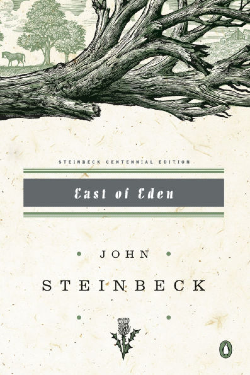
Summer Reading – Steinbeck's East of Eden
We are reading a classic piece of American literature in this space this summer: John Steinbeck's masterpiece, East of Eden. The novel reflects on human nature and retells the Cain and Abel story in Genesis. Join us as we think about what it means to be human.
We will kick off the 8-week series on Monday, June 1, with an introduction to the book and the series. No need to read ahead before June. We will provide a reading schedule soon. This weekly newsletter will include notes and theological ponderings throughout June and July as we all read together.
A Benediction (Or Miscellaneous Thoughts)
If you know someone who might like to read this newsletter, particularly someone who might want to read East of Eden with us, forward this email to them.
If you would like to subscribe to this newsletter, click here.


Member discussion